
Nature Recovery, Farming and Land Use
Ten questions on how Britain pays for nature recovery, how farming and building compete for the same ground, and what to do about water, disease and declining species. The answers below are Guy Kirkwood's, written from a working farm in west Devon.
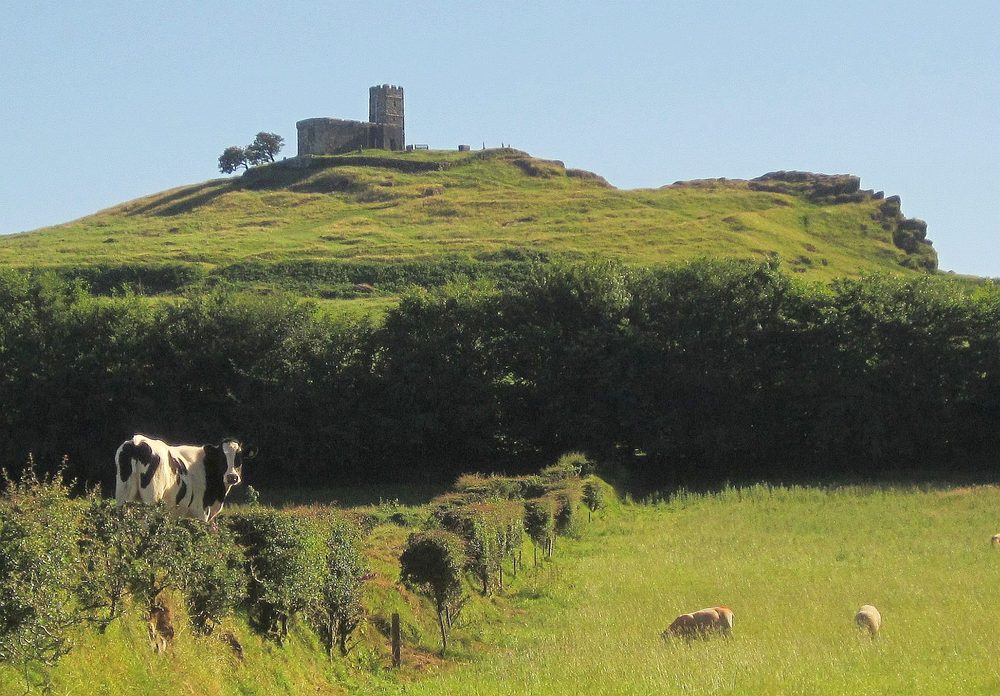
They were submitted in August 2026 to a Conservative Policy Forum consultation on Britain's natural environment, as an individual member from the constituency of Torridge and Tavistock. Guy answered as a farmer rather than on behalf of any group, and the same questions would have got the same answers whoever had asked them.
Each question is given as it was asked, followed by the answer as submitted. Every factual claim carries a numbered reference to the source list at the foot of this page. Where the argument rests on what happens at Collacombe, that is said plainly rather than dressed up as research.
1. The balance between public and private funding
What is the right balance between public and private funding for nature recovery?
Public money should pay for the things nobody will ever buy: clean water upstream of nobody's tap, a curlew nest, soil that holds together in a wet November. Private money should pay where a buyer has a legal reason to pay. That means biodiversity net gain, nutrient neutrality, and the new nature restoration levy under the Planning and Infrastructure Act 2025.[3]
The honest position is that private capital will not fill the gap. It has had years to try and has not, because voluntary demand is thin. Almost all the private money now moving is regulatory demand dressed as a market. That is fine, but we should call it what it is.
So the balance is close to what it already is. The state does most of it. The farming and countryside budget is £2.7 billion a year to 2029,[1] and Landscape Recovery gets £500 million spread over twenty years, roughly £25 million a year.[2] That is too small to matter at landscape scale. A larger, duller, reliable core scheme beats a thin one propped up by private money that has not turned up.
2. The role of local voluntary groups
What role should local voluntary groups have to play in the restoration of nature?
They already do the work. There are over 220 farmer clusters in England covering more than 450,000 hectares. England's 224 National Nature Reserves cover 116,000 hectares.[4] The farmer-led side is roughly four times the area of the state's flagship reserves, and it costs a fraction of the money.
What clusters need is a facilitator and a data record, not another scheme. The Countryside Stewardship Facilitation Fund runs out in 2027, and the £30 million Farmer Collaboration Fund meant to replace it has no published rule on whether existing clusters qualify.[5][6] If established groups must reinvent themselves to stay funded, we lose the one thing they hold that government does not: a consistent run of local data over many years.
Convening is the other half of it. Sir Geoffrey Cox has chaired three Dartmoor Forums since 2022, putting upland farmers, Natural England, Defra and the National Park in the same room. The third, in April 2025, brought the Farming Minister to Tavistock to discuss implementing the Fursdon Review.[8] That review produced 25 recommendations and a Land Use Management Group under an independent chair.[9] None of it needed new money. It needed someone with standing to make the parties talk before positions hardened. Government should fund that convening role wherever farming and designation are in conflict.
Recording matters for the same reason. We have 39 bird species logged at Collacombe because someone bothered to write them down.[7] No agency was ever going to pay for that. Fund the facilitator and the survey, then leave the group to set its own priorities.
3. Nature, food, housing and competing land use
How can we restore our natural heritage while also strengthening domestic food production, building new homes, and reconciling other competing land use demands?
Start by dropping the framing. Agriculture occupies about 69% of UK land.[10] Housing is a rounding error against that. Whether nature recovers depends almost entirely on how that 69% is farmed, not on whether we build.
So the trade-off worth arguing about sits inside farming, not between farming and housing. Restoration should be aimed at the ground where food output is lowest: wet corners, steep banks, floodplain margins, thin upland grazing. Those acres deliver most of the nature gain and cost least in food.
On housing, the present system spends absurd sums on site-specific mitigation that achieves little. The HS2 bat tunnel was first estimated at around £40 million and ended at £216 million.[11] Pooling that money into work that delivers at scale is the right instinct, and the Nature Restoration Fund is the vehicle. The risk is equally clear, and the critics are right to name it: it can become a payment to destroy.[12] The test should be that conservation measures are delivered and measured before homes are occupied, not promised afterwards.
4. Supporting and rewarding nature-friendly farming
How should we support and reward farmers for nature-friendly farming?
Pay for actions that fit a working rotation, and stop breaking the things that already work.
An example from here. Collacombe grows silage, maize and winter barley. Every crop is sold as feed to beef and dairy farms within two miles, and the muck and slurry come back from those same farms. Bought-in fertiliser is down 66% between the 2021-22 and 2025-26 cropping years.[7] No scheme paid for that. It came out of an ordinary local trade. Policy should notice that some of the largest environmental gains sit inside commercial arrangements that nobody designed for the purpose, and should avoid taxing or regulating them out of existence.
SFI26 moves the wrong way in one respect. The offer has been cut from 102 actions to 71, and the planning actions went with it: soil testing, nutrient management planning, integrated pest management. Payment rates for herbal leys, winter bird food and legume fallow were reduced.[13] The plan is what makes the action work. Paying for the cover crop while refusing to pay for the soil test is paying for the symptom.
5. Long-term certainty and fair reward
How can we give farmers the long-term certainty and fair reward they need to invest in nature-friendly practices with confidence?
Certainty is a contract problem, not a communications problem.
Consider what a farmer has actually lived through. SFI closed to new applications without warning in March 2025.[14] It reopened on 30 June 2026 with a £290 million budget, a £100,000 annual cap and one agreement per business.[15] Delinked payments are capped at £600 in both 2026 and 2027, then stop a year earlier than the transition originally promised.[16] From 6 April 2026, agricultural and business property relief gives 100% relief on the first £2.5 million and an effective 20% rate above it.[17] Four material changes, four short notice periods.
Nobody plants a hedge on that basis. If government wants twenty-year decisions from farmers, it must accept twenty-year liability itself. Offer ten-year agreements with index-linked rates. Publish a forward calendar of application windows for the whole spending period. Add a break clause that pays compensation if the scheme is closed early. Make the state carry the cost of its own changes of mind. That single reform would cost less than the schemes it would make credible.
6. Point-source pollution and who pays
Where the pollution has a clear and identifiable source, such as sewage discharges or industrial waste, should those responsible bear more of the cost of preventing and cleaning it up?
Yes, and the principle should apply without fear or favour.
But get the arithmetic straight before writing the policy. The Environment Agency attributes about 40% of the reasons English rivers fail to reach good ecological status to agriculture and rural land management, and about 36% to the water industry.[18] At the last full classification, around 14% of English rivers were at good ecological status.[19] Blaming water companies alone is popular and roughly two-fifths wrong.
Two conditions on making polluters pay. First, penalties should be hypothecated to catchment restoration rather than paid to the Treasury. A fine that vanishes into general taxation cleans no river. Second, the cost must land on shareholders and executives rather than on customer bills, or the polluter has not in fact paid.
Ofwat is being abolished and its functions folded into a single regulator.[20] That makes this the moment to write hypothecation into the founding legislation rather than promise it afterwards.
7. Diffuse pollution and agricultural runoff
Diffuse pollution such as agricultural runoff is far harder to attribute to one source. How can farmers be supported and rewarded for cutting runoff and improving water quality, rather than penalised for it?
Advice and capital first, enforcement last. That is already the stated policy. The problem is that it is rationed.
Catchment Sensitive Farming works, and it is oversubscribed. For the 2026 capital grants round, CSF advisers could take no new endorsement requests at all, because they were fully committed to visits already booked. Twenty-four capital items require a CSF endorsement before a farmer can even apply.[21] So the scheme meant to cut runoff has become the bottleneck. Fund more advisers. It is the cheapest fix on this list.
Second, slurry storage is the largest single capital item on most livestock farms and cannot be funded from margin at current prices. Grants must cover a real share of the cost rather than a token one.[22]
Third, let water companies buy upstream catchment work from farmers instead of building concrete downstream. It is usually cheaper per kilogramme of phosphate removed, and it turns the farmer into a supplier rather than a suspect.
8. Making habitats and species resilient
How can we help habitats and species become more resilient to a changing climate, rather than only trying to reduce emissions?
Three things, in order of value for money.
Water. Storing winter rain and releasing it slowly does more for habitat, farm and flood risk than almost anything else available. Farmers should be able to build reservoirs, leaky dams and ponds without a two-year consent battle.
Condition before creation. Around 26% of SSSI features had actions on track to reach favourable condition by March 2026, against a target of 50% by December 2030.[23] Repairing the sites we already own and already protect is cheaper than designating new ones, and those sites are where the species already are.
Connection. Species adapt to a warming climate by moving. Isolated reserves stop them. Hedgerows, river corridors and field margins are the network that lets them move, and farmers hold almost all of it. We maintain wildlife corridors across Collacombe linking hedges and field margins, so animals can cross the farm without breaking cover.[7] That costs nothing beyond leaving the links in place.
One caution on the framing of the question. Resilience and emissions are not alternatives. The Climate Change Committee's 2026 risk assessment warns that globally rare habitats such as chalk streams are already at risk.[24] There is a temperature above which no amount of adaptation saves a chalk stream.
9. Biosecurity in a warmer climate
What should be done to manage the biosecurity risks, such as new pests and diseases that a warmer climate brings?
Treat vector-borne disease as a national problem rather than a private one.
Bluetongue makes the case. There were 348 confirmed cases in Great Britain in the 2025-26 season,[25] the whole of England is a restricted zone,[26] and 50 cases were confirmed in England in the first month of the 2026-27 season.[27] A midge does not respect a farm boundary, so leaving vaccination to individual choice and individual budgets produces exactly the patchy cover that lets the virus keep circulating. Government should fund or heavily subsidise the vaccine and hold a strategic reserve, as it would for any other contagious national risk.
Bovine TB is the harder case, and it bears directly on the South West. Culling ends by the close of this Parliament, but a deployable cattle vaccine has not arrived.[28] Whatever one thinks of the cull, withdrawing one control before its replacement exists leaves a gap, and this region carries it. That needs an explicit plan with dates, not an expression of confidence.
Two constants apply whatever the disease. Surveillance must be funded properly, and compensation must never punish the farmer who reports first.
10. Which native species to prioritise
Which of our iconic native species should we prioritise protecting and how?
Pick few, target narrowly, and pay for decades. The cirl bunting shows that this works.
A national survey in 1989 found 118 pairs, almost all on the south Devon coast. By 2016 there were over 1,000 pairs.[29] That recovery came from paying farmers in Devon and Cornwall to do three specific things: grow spring barley, leave the weedy stubble standing over winter, and put grass margins round arable fields.[33] It took twenty-five years, and it worked because it was tied to one bird's actual requirements rather than to a general aspiration about biodiversity.
The second lesson is that the work carried other species with it. Linnet, skylark, yellowhammer and brown hare all gain from the same stubbles and margins.[33]
So choose species whose habitat needs pull a whole community along, and be ruthless about the number. A priority list of forty species is not a priority list. If a second is wanted, the curlew, for the same reason: fix the wet grassland and a good deal else follows.
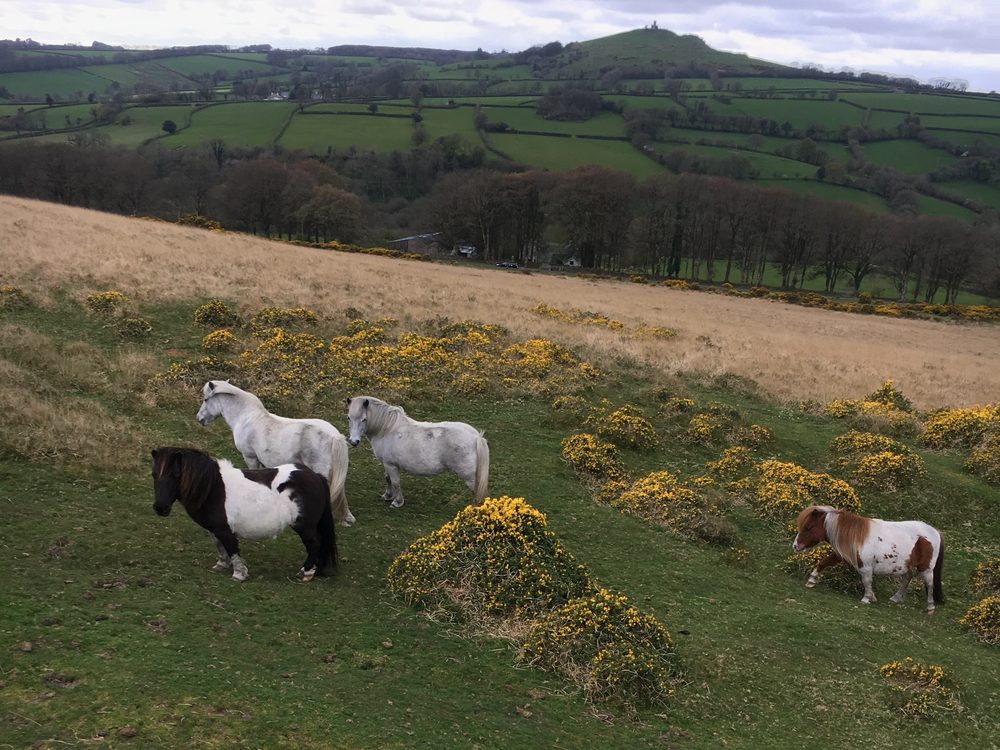
One case needs a different kind of fix. The Dartmoor hill pony has fallen from around 6,000 a quarter of a century ago to fewer than 1,000, and the breed is now classed as endangered.[30] The pressure is not neglect but arithmetic. Where ponies count towards the same stocking ceiling as cattle, a commoner facing a cap keeps the animals that earn money, and the pony loses that comparison every time.[32] Lunt and colleagues found in 2021 that pony grazing suppresses purple moor grass and lets heather germinate, which is work Natural England wants done.[31] So count conservation grazers under a separate head, and pay for the Molinia control they deliver. That is a dull change to a stocking calculation. It would also settle an argument that has become emotive on both sides, and end the use of the pony as a proxy for the wider row about numbers on the commons.
References
- Farming and countryside budget of £2.7 billion a year, April 2026 to March 2029. CLA, "SFI to open in two stages", January 2026, reporting the Spending Review settlement. Back to text
- Landscape Recovery, £500 million over twenty years, and the criticism that £25 million a year is inadequate. House of Lords Library, "Environmental improvement plan 2025", January 2026. Back to text
- Nature restoration levy and Environmental Delivery Plans. Planning and Infrastructure Act 2025, Royal Assent 18 December 2025; Defra Environment blog, "Laying the groundwork for the Nature Restoration Fund", 19 June 2026. Back to text
- Over 220 farmer clusters covering more than 450,000 hectares, against 224 National Nature Reserves covering 116,000 hectares in England. Game and Wildlife Conservation Trust, "Farmer Clusters: Ten Years of Success and a Model for Europe", November 2025. Back to text
- Countryside Stewardship Facilitation Fund expiring in 2027, and uncertainty over whether existing clusters qualify for the Farmer Collaboration Fund. Farmers Weekly, "How cluster farmers are delivering for food and nature", July 2026. Back to text
- £30 million Farmer Collaboration Fund announced at the Oxford Farming Conference. Farmers Weekly, "Defra sets out two-window SFI return in 2026", 8 January 2026. Back to text
- Collacombe cropping, local sales within two miles, return of muck and slurry, bought-in fertiliser down 66% between the 2021-22 and 2025-26 cropping years, bird species recorded, and wildlife corridors. Farm records, kirkwood.biz/farming. The submission gave 39 species, the figure when it was written. The count reached 44 in August 2026 and 48 by October 2026. Back to text
- Sir Geoffrey Cox KC MP, Member for Torridge and Tavistock, convening the Dartmoor Forums. The Moorlander, "MP holds successful Dartmoor farmers meeting", May 2022; Sir Geoffrey Cox, "Sir Geoffrey chairs third Dartmoor Forum in Tavistock with the Farming Minister", April 2025; The Moorlander, "Dartmoor farmers meet with minister to discuss future of agriculture", April 2025. Back to text
- Fursdon Review, the 25 recommendations, and the Dartmoor Land Use Management Group under independent chair Phil Stocker. Defra, "Government response to the independent review of protected site management on Dartmoor", April 2024; Defra Farming Blog, "Dartmoor Land Use Management Group: next steps", December 2024. Back to text
- Agriculture occupies around 69% of UK land. Defra, "Agricultural Land Use in the United Kingdom at 1 June 2025", as cited in the CPF discussion brief. Back to text
- HS2 bat tunnel, initial estimate around £40 million against a confirmed £216 million. New Civil Engineer, as cited in the CPF discussion brief. Back to text
- Criticism that the Nature Restoration Fund could become payment to destroy. CIEEM, "The Planning and Infrastructure Act 2025 is here", December 2025; The Wildlife Trusts' "cash to trash" characterisation. Back to text
- SFI26 reduced from 102 actions to 71; removal of soil testing, nutrient management and integrated pest management planning actions; reduced rates for herbal leys, winter bird food and legume fallow. Farmers Weekly, "Defra SFI overhaul a blow for species-rich grasslands", March 2026. Back to text
- SFI closed to new applications in March 2025. Defra Farming Blog, "An Update on the Sustainable Farming Incentive", March 2025. Back to text
- SFI26 opened 30 June 2026 with a £290 million budget, a £100,000 annual cap and one agreement per business. edie, "Defra announces £290m Sustainable Farming Incentive", June 2026; Defra Farming Blog, "SFI26: Window 1 now open", 30 June 2026. Back to text
- Delinked payments capped at £600 in 2026 and 2027, with 2027 the final year, a year earlier than originally planned. Farmers Weekly, "Delinked payments axed early as farm support is phased out", June 2026; Hansard, Lords debate on the Agriculture (Delinked Payments) (Reductions) (England) Regulations 2026, 27 April 2026. Back to text
- Agricultural and business property relief capped at £2.5 million for 100% relief from 6 April 2026, with an effective 20% rate above. Womble Bond Dickinson, "Key changes to agricultural and business property relief for inheritance tax", 2026, following the increase from £1 million announced on 23 December 2025. Back to text
- Around 40% of reasons English rivers fail to reach good ecological status attributed to agriculture and rural land management, against about 36% for the water industry. Environment Agency, cited in the Environmental Audit Committee report "Water quality in rivers", and by the Environment Agency chair at the NFU Conference. Back to text
- Around 14% of English rivers at good ecological status at the last full classification. Environment Agency classification data, 2020. Back to text
- Abolition of Ofwat and creation of a single regulator. Independent Water Commission (Cunliffe) final report, July 2025; water white paper "A new vision for water", January 2026, Commons Library summary. Back to text
- Catchment Sensitive Farming advisers unable to take new endorsement requests for the 2026 capital grants round, and 24 capital items requiring CSF support. NFU, "Catchment Sensitive Farming", updated 24 March 2026; Farming and Wildlife Advisory Group South West, "Grants and Schemes", 2026. Back to text
- Slurry Infrastructure grant pays the published reference cost for eligible items or 50% of the total invoice cost, whichever is lower, within a range of £25,000 to £250,000 per business. Defra and the Rural Payments Agency, "About the Slurry Infrastructure grant round 2, who can apply and what it can pay for", gov.uk, updated 2026. Back to text
- Around 26% of SSSI features with actions on track to reach favourable condition by March 2026, against a 50% target for December 2030. Defra, "Environmental Improvement Plan: Annual Progress Report", July 2026; interim target confirmed in EIP25, December 2025. Back to text
- Chalk streams and other globally rare habitats at risk. Climate Change Committee, "A well-adapted UK: The Fourth Independent Assessment of UK Climate Risk", May 2026, as cited in the CPF discussion brief. Back to text
- 348 confirmed bluetongue cases in Great Britain in the 2025-26 season. Ruminant Health and Welfare, monthly bluetongue update, June 2026. Back to text
- Whole of England a bluetongue restricted zone from November 2025. Defra and APHA guidance. Back to text
- 50 cases in England in the 2026-27 season since 1 July 2026. AHDB, "Bluetongue virus latest news", July 2026. Back to text
- Badger culling to end by the close of this Parliament, with 2025 the final year of industry-led culling in the High Risk and Edge Areas, and a cattle vaccine still in development. Defra, "Government welcomes expert-led recommendations for a new bovine TB eradication strategy", June 2026. Back to text
- 118 cirl bunting pairs recorded in 1989, rising to 1,078 pairs by 2016, almost all in south Devon. RSPB Cirl Bunting Recovery Programme; BBC News, "RSPB hails remarkable recovery of threatened cirl bunting"; Farm Wildlife, "Saving the cirl bunting from extinction in the UK". Back to text
- Dartmoor hill pony numbers falling from around 6,000 a quarter of a century ago to fewer than 1,000, and the breed classed as endangered. Horse & Hound, June 2026, as cited in the CPF discussion brief. Back to text
- Pony grazing suppressing Molinia caerulea and encouraging Calluna vulgaris germination. Lunt, P. et al., "Using Dartmoor Ponies in Conservation Grazing to Reduce Molinia caerulea Dominance and Encourage Germination of Calluna vulgaris in Heathland Vegetation on Dartmoor, UK", 2021, as cited in the CPF discussion brief. Back to text
- Concern that counting ponies alongside cattle in overall stocking calculations could reduce pony numbers. CPF discussion brief, citing pony organisations and campaigners in 2026. Natural England, "Grazing on Dartmoor: setting the record straight on Natural England's role", 2026, sets out the contrary view. Back to text
- Management actions of spring barley, overwinter weedy stubble and grass field margins, and co-benefits for linnet, skylark, yellowhammer and brown hare. RSPB, "Cirl Bunting conservation: advice for farmers"; RSPB press material on the 2016 survey. Back to text
More
Read about the farming at Collacombe, which several of the answers above draw on.